
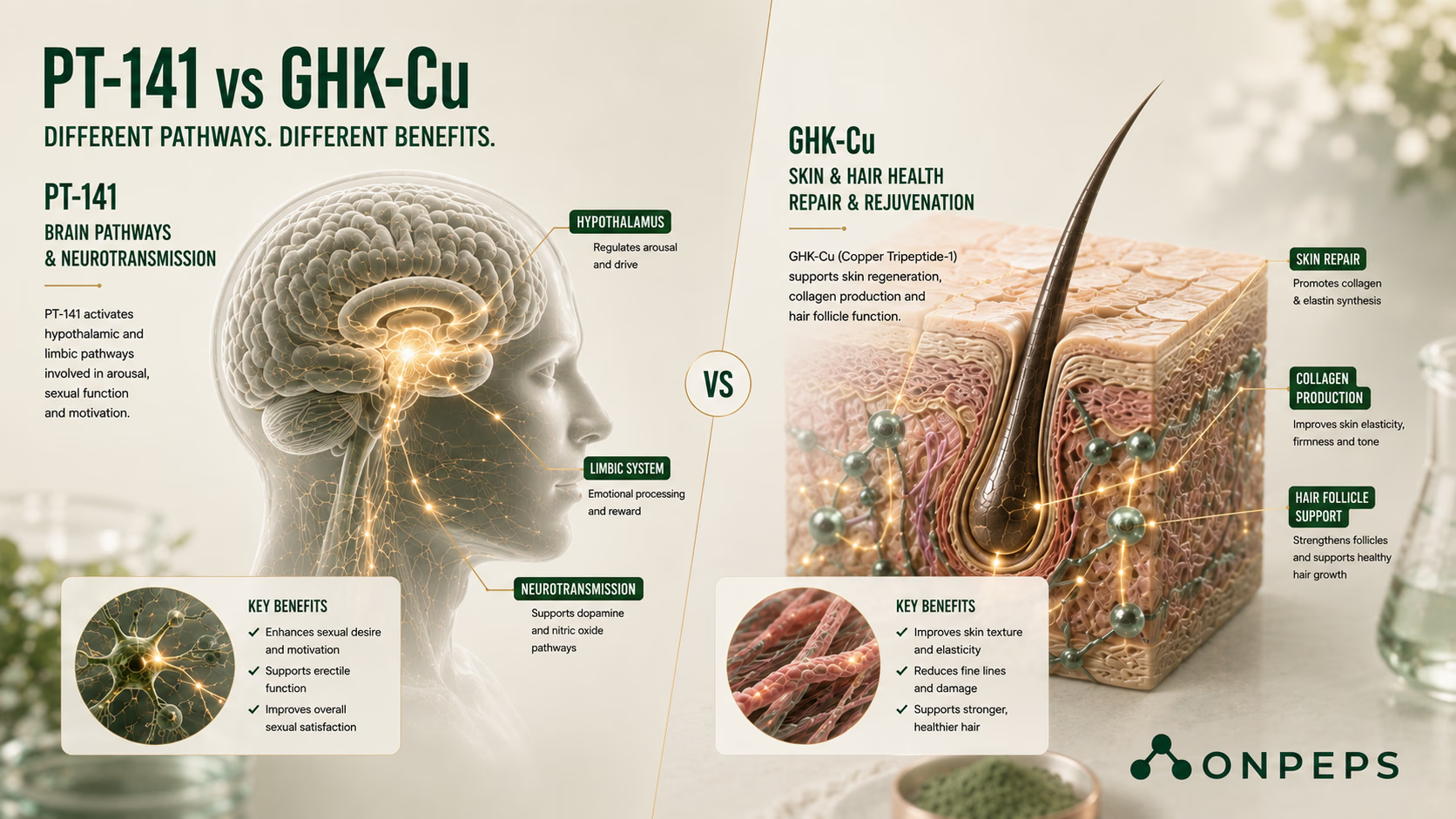
GHK-Cu is a naturally occurring copper-binding peptide found in human plasma, saliva, and wound exudate. It is mainly studied for its roles in skin repair, tissue regeneration, and aging research. GHK-Cu is released during tissue repair and acts as a biological repair signal in the body.
A copper peptide that declines with age
GHK-Cu levels naturally decline with age, from about 200 ng/ml at age 20 to about 80 ng/ml at age 60. This makes it one of the most studied peptides in skin aging and tissue repair.
Human evidence for topical use
GHK-Cu’s clinical evidence is the only area in this class with truly large-scale human trial data. Multiple controlled human studies have confirmed measurable improvements in skin density and thickness, collagen synthesis, wrinkle depth, and skin elasticity.
A 12-week randomized study of 71 women found that GHK-Cu cream improved skin density, laxity, fine lines, and wrinkle depth compared with placebo. A 2025 review published on PMC also highlighted GHK-Cu’s role in stimulating collagen and elastin production. It has also been found to influence genes involved in tissue repair and skin remodeling.
Limits of systemic evidence
Caution is needed, however, because these studies all relate to topical use of GHK-Cu. Once injection is discussed, research is very limited, and results are not consistent with topical evidence. Systemic injection lacks clinical trials, and improper dosing carries a theoretical risk of copper accumulation.
Topical versus systemic use
Topical GHK-Cu has reliable human data supporting its role in skin remodeling, while systemic injection lacks clinical trials. This distinction is critical for understanding GHK-Cu’s practical boundaries.
Conclusion
GHK-Cu is one of the few peptides with strong human evidence for topical use. But its systemic use remains unverified. Understanding this difference helps make more rational choices.